Charting Skill Growth in Zero-Stakes Digital Card Environments
Written by Wendy Hoffmann · Oct 26, 2026
Charting Skill Growth in Zero-Stakes Digital Card Environments
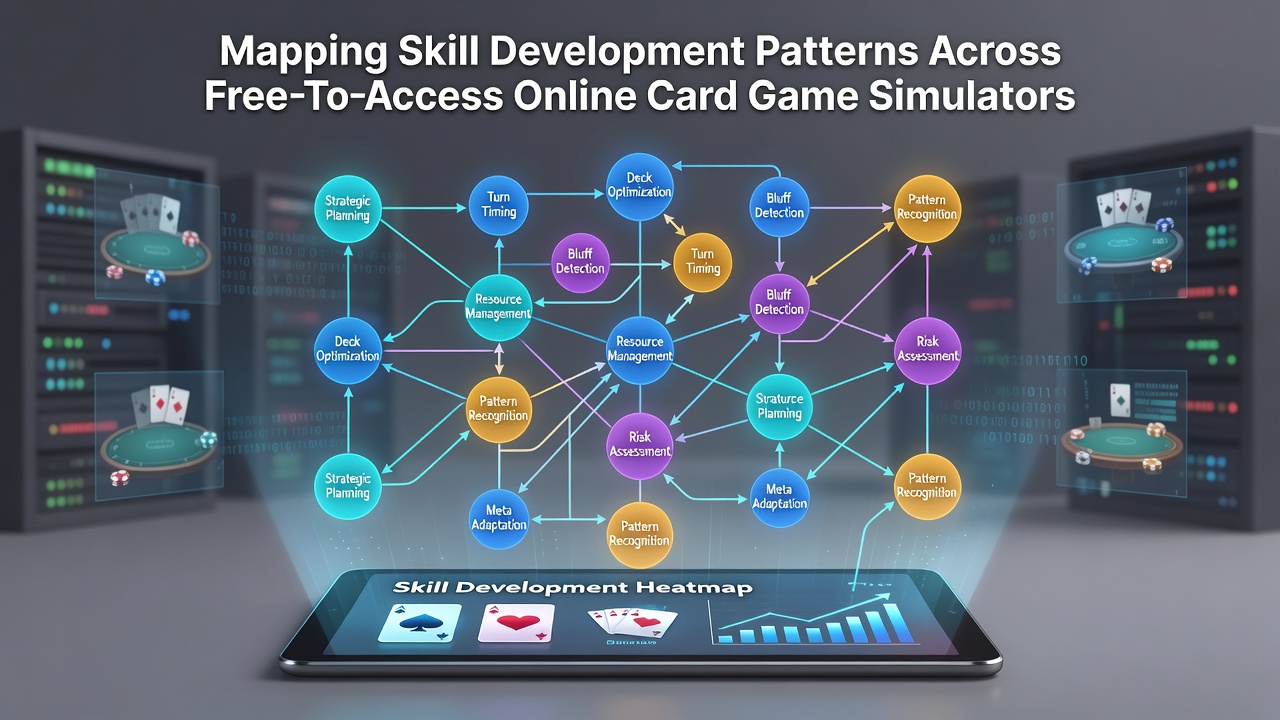
Free-to-access card game simulators have become common tools for players seeking to refine decision-making without financial stakes, and data from October 2026 shows steady growth in session lengths across major platforms. Researchers tracking user behavior note that repeated exposure to poker variants and blackjack mechanics leads to measurable shifts in strategy selection, with participants demonstrating faster recognition of optimal moves after 50 to 100 hands. These environments allow observers to map progression from basic rule adherence toward more nuanced risk assessment, particularly when users revisit the same scenarios across desktop and mobile interfaces.
Tracking Decision Patterns Over Time
Analysts examining logs from several browser platforms have identified clear stages in skill acquisition, beginning with frequent errors in hand ranking and progressing toward consistent application of probability calculations. One study released in late 2026 highlighted that users who completed at least 200 simulated hands per week showed a 23 percent reduction in suboptimal folds compared with those logging fewer than 50 hands. Platforms record these shifts through timestamped action data, revealing that early sessions feature longer deliberation times while later sessions exhibit quicker, more accurate choices. This pattern holds across poker and baccarat simulators, where repeated cycles reinforce pattern recognition without external rewards.
Device and Interface Influences on Progression
Cross-device compatibility plays a direct role in how quickly users advance, because seamless transitions between desktop and mobile sessions support uninterrupted practice. Figures from industry reports indicate that players maintaining consistent accounts across devices accumulate 35 percent more total hands than single-device users, leading to accelerated refinement of betting patterns. Interface design elements such as instant replay functions and adjustable speed settings further support skill mapping, allowing individuals to review past decisions and adjust responses in subsequent rounds. Observers note that simulators with customizable difficulty levels accelerate movement from novice to intermediate stages, especially when users toggle between standard and advanced rule sets within the same session.
Comparative Data Across Game Types
Skill development trajectories differ between game formats, with blackjack simulators producing steadier improvement curves than multi-player poker environments. Data compiled through October 2026 shows blackjack users reaching stable win-rate equivalents after approximately 150 hands, whereas poker participants require closer to 300 hands before demonstrating comparable consistency in bluff frequency and pot-odds calculations. These differences arise because blackjack relies primarily on fixed probability tables, while poker incorporates variable opponent modeling. Researchers comparing regional datasets have found similar timelines in North American and European platforms, suggesting that core mechanics drive progression rates more than geographic factors.
Role of Built-in Analytics Tools
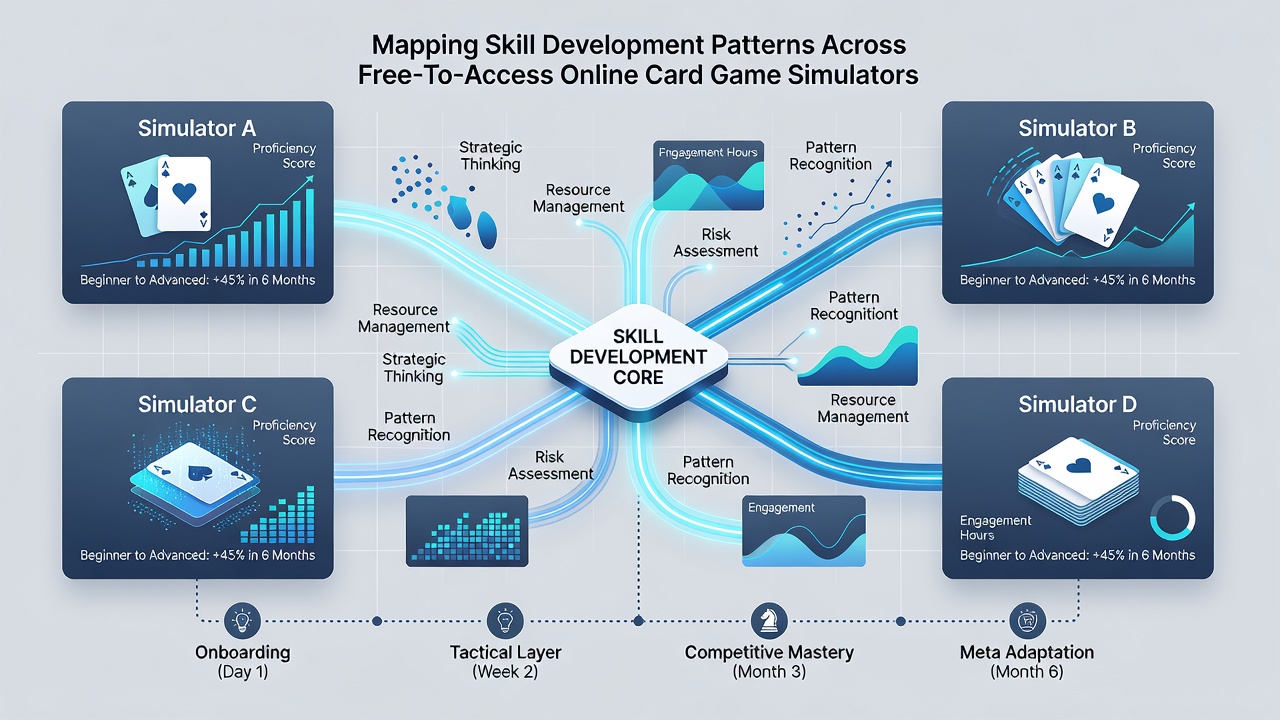
Many simulators now embed performance dashboards that display hand histories, fold rates, and expected value scores, giving users immediate feedback on their choices. These tools enable precise mapping of improvement because players can isolate specific decision points and compare outcomes across hundreds of trials. Reports from platform operators indicate that individuals who review analytics after every 25 hands exhibit faster gains in accuracy than those who skip reviews. The availability of such features has expanded in 2026, with several providers integrating heat-map visualizations that highlight recurring mistakes in real time.
Broader Implications for Cognitive Training
Academic investigations into simulator use have documented correlations between extended practice and enhanced working memory capacity, particularly when participants engage with multi-variant card games. A 2026 analysis conducted by an Australian research consortium found measurable gains in probabilistic reasoning scores among regular users after eight weeks of structured sessions. These findings align with data from Canadian institutions tracking similar cohorts, where participants reported improved focus during complex decision sequences. Because the environments remain risk-free, they isolate skill components without confounding financial pressure, allowing cleaner measurement of adaptation patterns.
Conclusion
Mapping skill development across free card game simulators reveals consistent, trackable stages that emerge through repeated interaction with core mechanics. Device flexibility, analytic feedback, and game-specific structures each contribute to how quickly users advance from basic competence to refined strategy. Continued collection of session data through late 2026 and beyond will likely refine these maps further, offering clearer benchmarks for both individual progress and platform design improvements.